Why Shipping and Freight Cost Accuracy Keeps Breaking Down in Business Central
Listen to the Podcast
Shipping Errors That Disrupt Final Delivery
Operations teams frequently encounter incorrect package weights, dimensions, or service selections during shipping. These errors result in delayed deliveries, unexpected carrier chargebacks, and frustrated customers waiting for their orders. Warehouse staff often struggle to capture accurate freight costs, especially for less-than-truckload (LTL) and full truckload (FTL) shipments. Discrepancies between expected and actual freight charges create reconciliation challenges and obscure true shipping expenses.
Manual Data Entry Without Validation
Shipping processes rely heavily on manual input of weights, dimensions, addresses, and carrier choices, which opens the door for mistakes. Because shipping execution often spans multiple disconnected systems or workflows, these errors remain uncorrected until after shipment.
Furthermore, freight cost capture typically happens after the fact, making it difficult to align actual charges with orders or financial records. Lack of integration between shipping and finance systems prolongs this mismatch and complicates cost reconciliation.
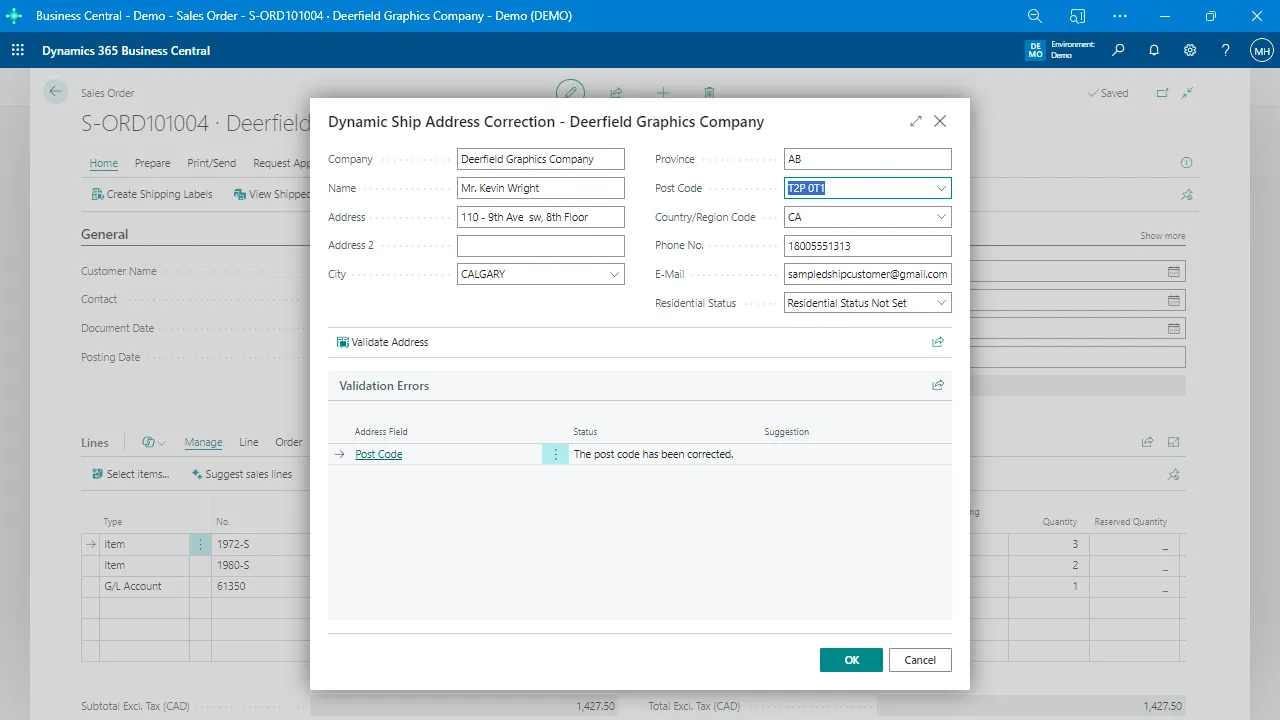
Validates and corrects shipping addresses, reducing errors and delays in the shipping process. Enhances operational efficiency and ensures smooth delivery.
Controls That Enforce Accurate Shipping Execution
The shipping workflow must include real-time validation of package data such as weight, dimensions, and service selections at the point of packing and shipment creation. It requires integrated carrier rate shopping to ensure accurate cost estimates reflect current pricing.
Additionally, freight charge capture must be automated and linked directly to sales or purchase orders. Shipping documentation, tracking updates, and cost reconciliations need to flow through unified processes that prevent errors and support audit trails.
How Business Central Models Shipping and Freight Costs
Microsoft Dynamics 365 Business Central maintains structured sales and purchase orders, packages, shipments, and freight costs, but native shipping capabilities rely heavily on manual data entry and disconnected processes. While the core system tracks freight expenses, it does not provide integrated carrier rate shopping or automated label generation.
Business Central supports dimensional data for packages and allows users to enter freight costs, but reconciling charges with carrier invoices and shipments requires manual intervention. The system assumes users manage shipping details outside of the core workflows, which can lead to discrepancies and delays.
When Native Shipping Controls Aren't Enough
Standard Business Central does not automate real-time carrier rate shopping or validate shipping details during packing, leaving gaps in accuracy and cost reconciliation. Insight Works’ Dynamic Ship app addresses these specific gaps by integrating carrier connectivity directly into Business Central. It automates rate shopping across parcel, LTL, and FTL carriers, enforces package verification, and generates shipping labels and tracking information within a single workflow.
For execution accuracy, Warehouse Insight supports barcode-driven shipping verification to reduce manual entry errors on the warehouse floor. License Plating helps manage pallet and container identification to ensure shipments are accurately tracked and packaged. Together, these Insight Works apps extend Business Central’s shipping and freight capabilities with process control and real-time validation.
Accurate Shipping Depends on Integrated Execution Controls
Shipping errors and freight cost discrepancies are common when manual processes and disconnected systems are involved. Real-time validation, integrated carrier rate shopping, and unified freight cost capture are essential capabilities to reduce shipping failures at the crucial last mile.
Understanding the operational limitations of standard Business Central shipping workflows helps clarify where precision controls and execution enforcement must be introduced to improve shipping accuracy and cost fidelity.
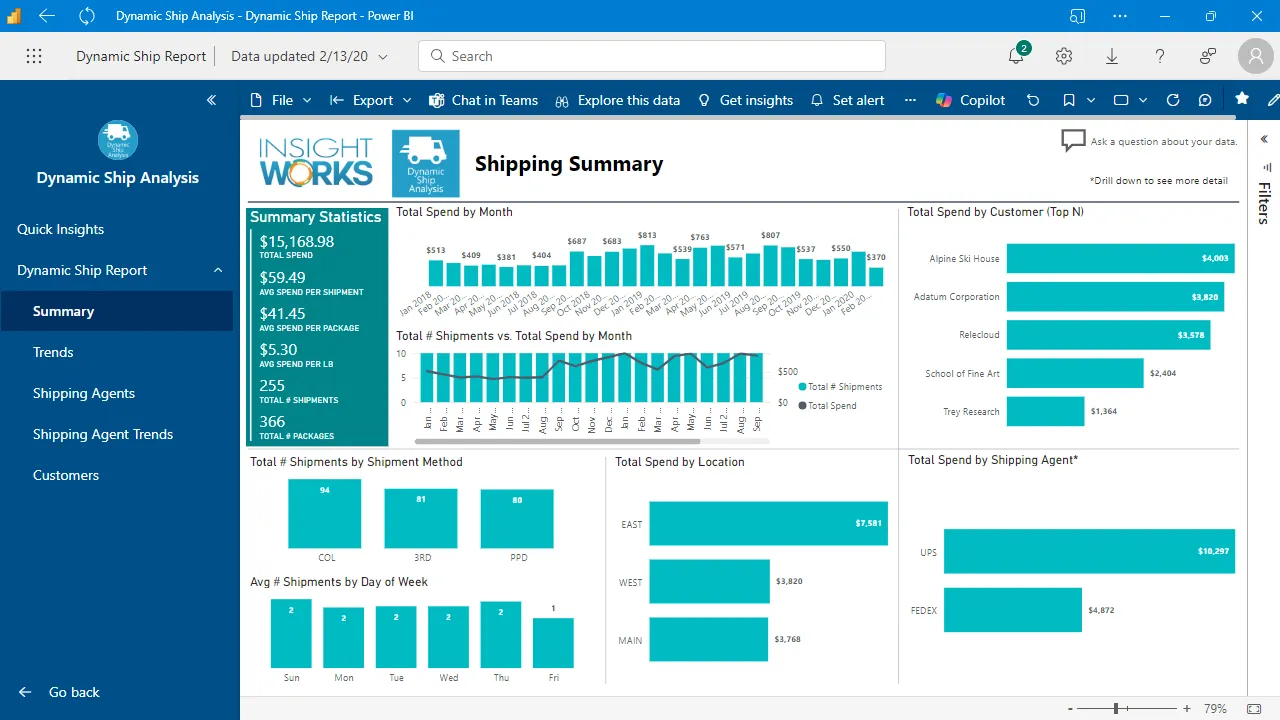
Displays a Power BI dashboard summarizing key shipping metrics like total spend, average cost per shipment, and top customers. Businesses can use these insights to evaluate shipping performance and optimize costs.