How Real-Time Rate Shopping in Business Central Improves Shipping Cost Control
Many organizations struggle to control shipping costs in Microsoft Dynamics 365 Business Central. Sales teams often estimate freight during order entry. Warehouse teams confirm actual costs later in separate carrier tools. Finance teams then reconcile the difference after invoicing.
This process creates uncertainty at every stage. Each team works with partial information. Shipping decisions rely on assumptions instead of real data.
The Dynamic Ship app from Insight Works addresses this issue by providing real-time carrier rates directly inside Business Central.
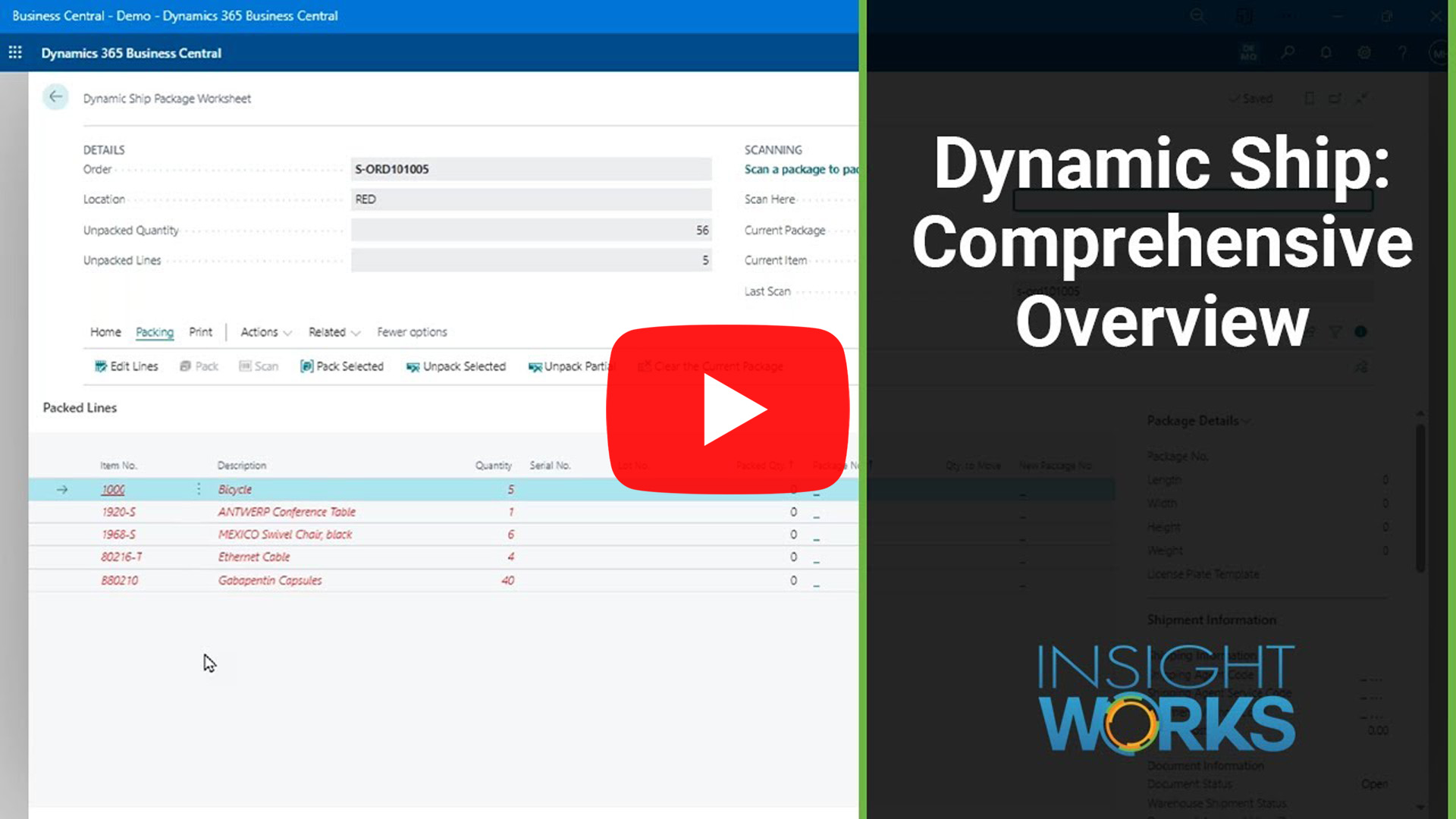
Why Estimated Freight Breaks Down Over Time
Estimated shipping charges work in low-volume environments. As shipping volumes increase, estimates introduce financial and operational risks.
Teams commonly experience the following issues:
- Premium services are selected when lower-cost options exist.
- Freight margins fluctuate without a clear explanation.
- Customers question shipping charges on invoices.
- Accounting teams spend time correcting freight discrepancies.
Accurate shipping decisions require access to real carrier rates at the time of selection.
Viewing Carrier Rates Before Selecting a Service
Dynamic Ship retrieves live rates from configured parcel, LTL, and FTL carriers using the company’s carrier accounts.
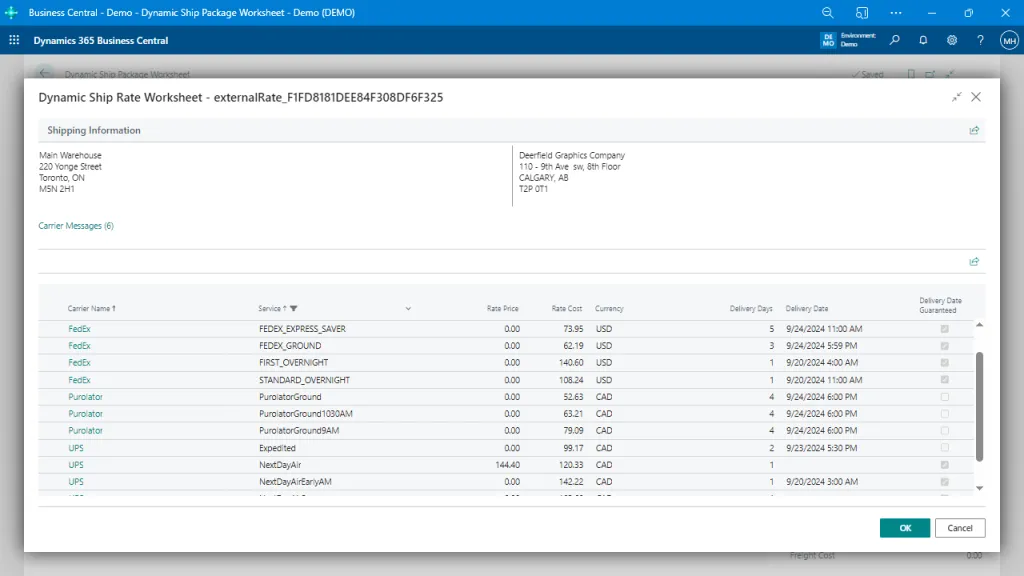
The rate shopping interface displays available carriers, service levels, costs, and delivery times in a single view. Users compare options before choosing a carrier. This approach replaces guesswork with measurable data.
Using Freight Quotes Earlier in the Sales Process
Shipping cost decisions often begin during sales conversations. Customers expect clear delivery options and accurate charges.
Dynamic Ship enables teams to retrieve freight quotes directly from sales orders and sales quotes.
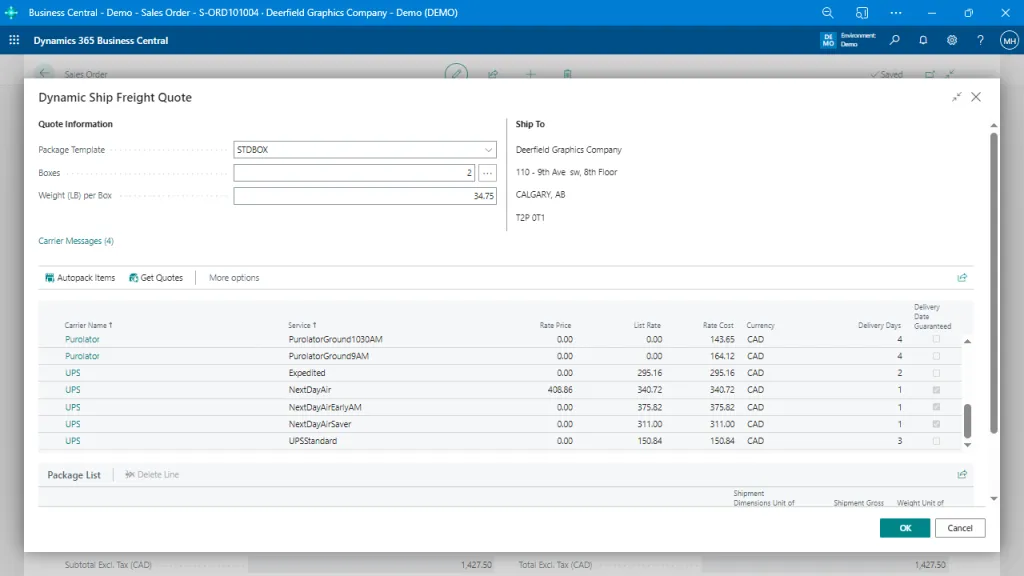
Sales and customer service teams can review real shipping costs while confirming order details. This visibility helps set accurate expectations and reduces last-minute changes during fulfillment.
Reducing Overspending Through Better Comparisons
Without rate comparison, shipping teams often rely on familiar carriers or default services. Habit replaces evaluation.
Dynamic Ship encourages better decisions by presenting multiple carrier options with similar delivery times.
Users can identify lower-cost services that meet the same delivery requirements. These daily decisions often reduce freight spend without changing carrier contracts or internal policies.
Applying Freight Pricing Rules with Accurate Inputs
Freight pricing rules depend on reliable cost data. Markups, discounts, and free freight thresholds lose effectiveness when teams base them on estimates.
Dynamic Ship feeds live carrier costs into freight pricing logic.
Sales and customer service teams can review real shipping costs while confirming order details. This visibility helps set accurate expectations and reduces last-minute changes during fulfillment.
Reducing Overspending Through Better Comparisons
Without rate comparison, shipping teams often rely on familiar carriers or default services. Habit replaces evaluation.
Dynamic Ship encourages better decisions by presenting multiple carrier options with similar delivery times.
Users can identify lower-cost services that meet the same delivery requirements. These daily decisions often reduce freight spend without changing carrier contracts or internal policies.
Applying Freight Pricing Rules with Accurate Inputs
Freight pricing rules depend on reliable cost data. Markups, discounts, and free freight thresholds lose effectiveness when teams base them on estimates.
Dynamic Ship feeds live carrier costs into freight pricing logic.
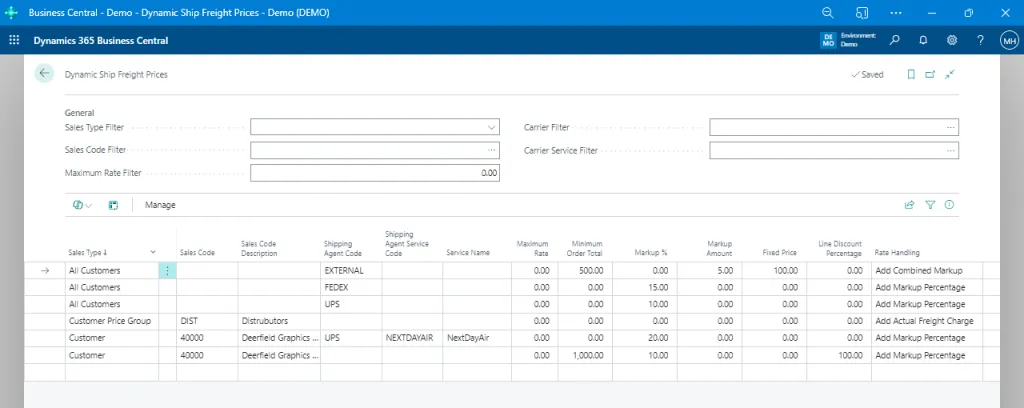
This connection ensures pricing rules apply to actual shipping costs. Finance teams gain more predictable margins. Customer invoices reflect real carrier charges.
Teams That Benefit from Real-Time Rate Visibility
Real-time rate shopping supports several roles across the organization:
- Shipping teams select carriers with confidence.
- Sales teams provide accurate delivery options.
- Operations managers gain visibility into freight trends.
- Finance teams reduce freight-related adjustments.
Each role uses the same data in Business Central.
Shipping Cost Control Begins with Better Decisions
Shipping cost control improves when teams make decisions using accurate information. Real-time rate shopping gives Business Central users access to live carrier rates when making decisions.
Dynamic Ship replaces estimates with real data. That change leads to more consistent carrier selection, lower freight spend, and fewer billing corrections.
To see how real-time rate shopping works inside Microsoft Dynamics 365 Business Central, visit ShippingForDynamics.com and explore how live carrier rates can help your organization control shipping costs more effectively, or reach out to your Microsoft Partner today.