Finance Where I'm From: Authorized Numbers and Electronic Invoicing in the Dominican Republic with Microsoft Dynamics 365 Business Central
In a lot of countries, the invoice number is yours to decide. Your system assigns it however you like, sequential or prefixed, whatever suits the business. The Dominican Republic doesn't work that way. Every invoice has to carry an NCF, a Número de Comprobante Fiscal, and you can't simply make one up. It comes from a range the tax authority has authorized ahead of time, and the range you use describes what kind of document this is and what the person receiving it is allowed to do with it. Pick the wrong one, or run out, and you can't issue a valid invoice at all.
In this article we will walk through the two things that shape finance work in the Dominican Republic for anyone running Microsoft Dynamics 365 Business Central. The first is the NCF itself and its move into the electronic world as the e-CF. The second is the monthly reporting rhythm of this model, as set by the DGII, the tax authority.
The NCF: A government-authorized number on every document
The NCF sits at the center of Dominican tax control. Before a company can invoice at all, it asks the DGII for authorized number ranges, and each range belongs to a specific document type. A credit-fiscal invoice, the kind that lets the buyer claim a tax credit, draws from a different range than a final-consumer invoice, which is different again from a debit note, a credit note, or a document for a special regime. Since the type is baked into the NCF, the number both identifies the document for business operations and for the government.
Each time you issue an invoice, the system has to take the next number from the correct authorized range for that document type, keep count of how many remain, and never reuse or skip a number in a way that breaks the sequence. Once an authorized range is exhausted, invoicing stops until the DGII approves a new one.
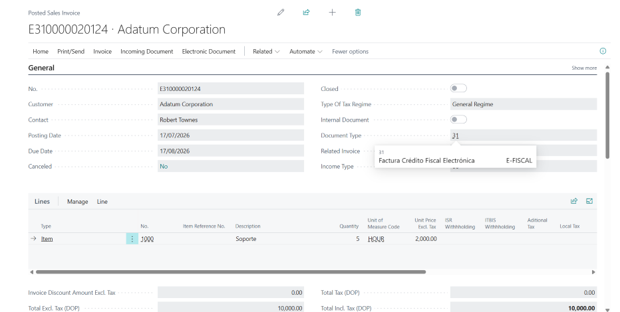
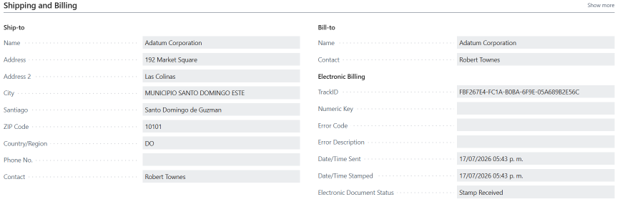
On top of all this comes the move to e-CF, the comprobante fiscal electrónico. The Dominican Republic is shifting invoicing to an electronic model where the document is an XML the DGII validates, following the same clearance logic that has become common across the region, with taxpayers brought in by phases. For a finance team, the NCF logic they already know continues but gets wrapped in an electronic flow where the document is signed, transmitted, and acknowledged by the authority.
In Business Central, the Dominican Republic localization's job is to carry that NCF discipline into the electronic world so nobody has to relearn how invoicing works.
The monthly rhythm: 606, 607, and ITBIS
The NCF governs each document, but the DGII's reporting formats govern the month. Dominican taxpayers report their purchases and sales to the authority in structured files detailing each activity: the 606 for purchases, the 607 for sales, and the 608 for NCFs that were voided. And because both sides of a deal report it, what you declare buying has to match what your supplier declared selling. The DGII cross-checks, so businesses are likely to hear about a mismatch.
FREE Membership Required to View Full Content:
Joining MSDynamicsWorld.com gives you free, unlimited access to news, analysis, white papers, case studies, product brochures, and more. You can also receive periodic email newsletters with the latest relevant articles and content updates.
Learn more about us here