Finance Where I'm From: Closing the purchase loop in Costa Rica with Microsoft Dynamics 365 Business Central

Most electronic invoicing systems in the world are built around the company that issues the invoice. Costa Rica decided that wasn't enough. Here, when a supplier sends you an electronic invoice, your company is expected to respond formally through the tax authority's digital system to accept or reject the document. And if you want to use the VAT credit from that purchase, that response must be part of your supporting evidence.
As this design choice shows, Costa Rica approaches tax administration with strong incentives for proactive engagement by businesses, and it's the first of two topics I want to explore in this article. The second is the country's ongoing modernization push, because Costa Rica has been busy: a new version of the electronic invoice format and a complete replacement of the tax administration platform have both landed recently, and finance teams are living through the transition.
The acceptance message: Closing the loop on every purchase
In Costa Rica's model, electronic documents — invoices, credit notes, debit notes, tickets — are XML files submitted to the Ministerio de Hacienda for validation, which should sound familiar to anyone who knows a bit about other Latin American systems. But in Costa Rica, the recipient of an invoice sends back a receptor message stating whether the document is accepted, partially accepted, or rejected. That message is itself an electronic document, validated by Hacienda like any other.
For accounts payable, this means that every incoming supplier invoice needs to be matched against what was ordered and received, the recipient needs to make a decision to accept or reject, and that decision has to be transmitted within the required window. Multiply this by every supplier invoice in a month, and the acceptance flow becomes a real operational process with tax consequences. Companies that treat it as an afterthought tend to discover the problem later when they must defend a VAT credit.
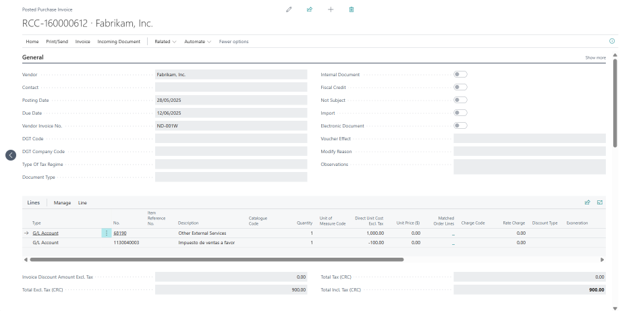
ERP has the potential to help businesses with this requirement, but it can also provide no help at all. With the Costa Rican localization in Dynamics 365 Business Central, incoming XML documents are received into the system, matched against purchase records, and the acceptance message is generated and transmitted from the same screen where AP already works. The tax response becomes a by-product of the three-way match.
A moving target: new format, new platform
The second thing defining finance work in Costa Rica right now is change. The government recently made two significant transitions in quick succession. It moved to version 4.4 of the electronic document format, a substantial revision that touched document structures, validations, and required data. Hacienda has also replaced its long-standing tax administration platform with TRIBU-CR, a new system through which taxpayers now handle their filings and obligations.
FREE Membership Required to View Full Content:
Joining MSDynamicsWorld.com gives you free, unlimited access to news, analysis, white papers, case studies, product brochures, and more. You can also receive periodic email newsletters with the latest relevant articles and content updates.
Learn more about us here