How to Rebuild Dynamics CRM for AI-Driven Sales & Marketing
In boardrooms across global B2B organizations, the conversation has shifted. CRM is no longer viewed as a sales tracking system or marketing database. It is being redefined as the operating core of revenue execution.
Yet many enterprises running Microsoft Dynamics CRM (now Dynamics 365 CE ) are facing a hard truth: their current environment was designed for a pre-AI world.
Workflows were built for manual inputs. Forecasts rely on rep updates. Marketing automation runs in parallel, not in sync. Copilot may be enabled — but not embedded into strategy.
In 2026, that gap becomes costly.
Rebuilding Dynamics CRM for AI-driven B2B sales and marketing is not about customization. It is about redesigning the revenue operating model around intelligence, automation, and predictive insight.
This article outlines how enterprise organizations should approach a full CRM rebuild to unlock measurable business impact.
Why Many Dynamics CRM Environments Are Underperforming
Across industries, I see the same pattern. Dynamics was implemented with strong intentions—standardized pipelines, structured reporting, marketing automation alignment. Yet years later, adoption plateaus and executive confidence erodes.
Why?
Because most CRM environments were built around control and visibility—not intelligence and enablement.
Sales teams often experience CRM as an administrative obligation. Reps manually update stages before forecast calls. Notes are entered after meetings but rarely analyzed. Marketing passes leads, but qualification criteria differ across regions. Dashboards display lagging indicators, not predictive signals.
Even organizations that have enabled Microsoft Copilot frequently discover that the underlying data structure and workflow logic were never designed to support AI-driven decision-making. Inconsistent fields, duplicate records, siloed regional processes, and fragmented reporting models dilute AI effectiveness.
CRM becomes reactive. And in modern B2B environments, reactive is risky.
In 2026, executive teams expect revenue predictability. They expect intelligent forecasting. They expect cross-sell signals surfaced automatically. Legacy CRM architecture simply cannot meet those expectations without fundamental redesign.
What “AI-Driven CRM” Actually Means (And What It Does Not)
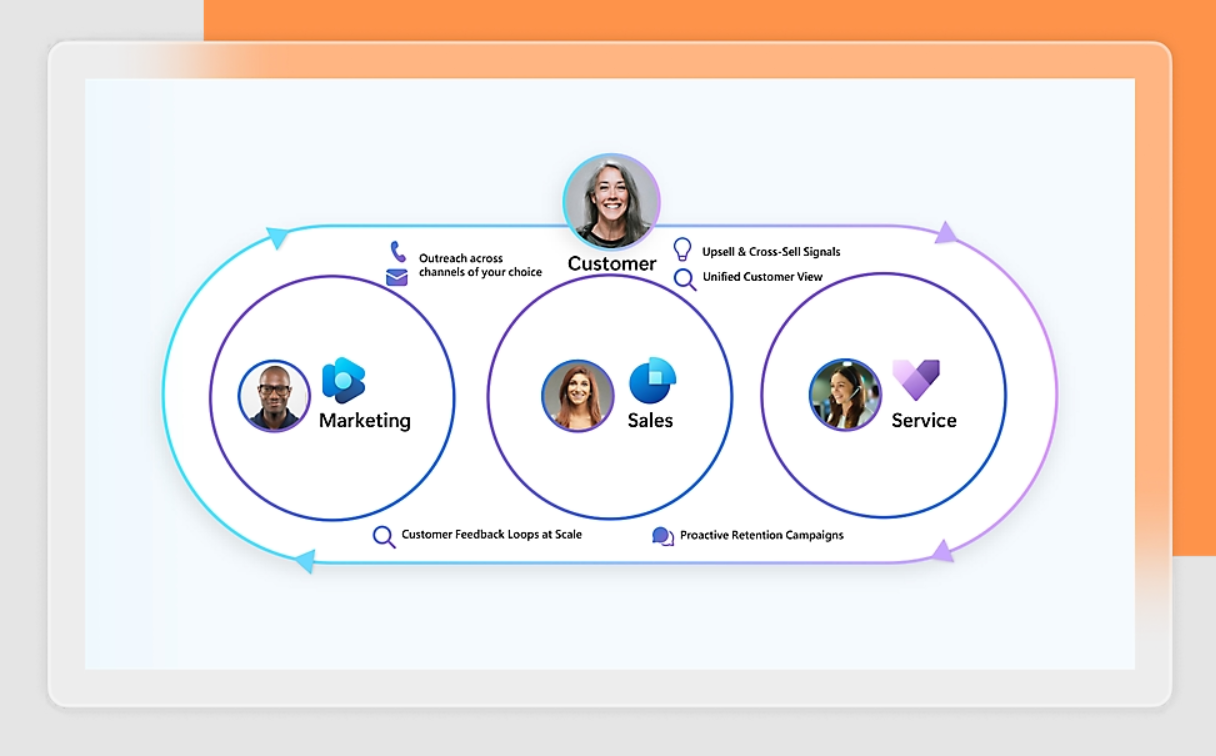
There is considerable noise around AI in CRM. Many assume enabling Copilot equals transformation. It does not.
An AI-driven Dynamics CRM environment is defined by three characteristics:
- Intelligence embedded into workflows
- Predictive insights guiding decisions
- Automation initiating meaningful action
This means that AI does not sit beside CRM. It operates within it.
For example, instead of a sales manager asking, “Which deals are at risk?” the system proactively flags opportunities where engagement levels are declining, stakeholders are disengaging, or stage progression is slowing.
Instead of marketing teams manually reviewing campaign responses, predictive models assess behavioral data to prioritize leads based on conversion probability.
Instead of executives reviewing static dashboards, AI-enhanced reporting highlights anomalies in pipeline velocity or territory performance before quarterly results are affected.
AI-driven CRM is proactive. Traditional CRM is retrospective.
The distinction is strategic.
A Strategic Framework to Rebuild Dynamics CRM for 2026
Successful CRM rebuilds follow a structured framework. Technology alone does not solve the problem. Architecture, governance, and behavioral alignment must move together.
I recommend a four-pillar approach.
Pillar One: Architect Marketing and Sales Alignment into the System
One of the most persistent friction points in B2B organizations is the marketing-to-sales transition.
In legacy environments, definitions vary. An MQL in one region is an SQL in another. Recycling processes are inconsistent. Attribution models lack clarity. Sales teams question lead quality. Marketing questions follow-up speed.
When rebuilding Dynamics CRM, alignment cannot remain a policy discussion. It must be embedded into system design.
This requires clearly defined lifecycle stages configured within Dynamics 365. Automated lead routing rules must reflect territory structures and capacity. SLAs must be measurable within the platform. Closed-loop attribution must track campaign influence across opportunity stages.
Modern marketing automation—whether powered by Customer Insights Journeys or integrated tools like ClickDimensions—must operate directly within the CRM data structure rather than in parallel.
When alignment is architected into the system, friction reduces. Conversion improves. Accountability becomes transparent.
AI amplifies clarity—but only if alignment exists first.
Pillar Two: Rebuild the Data Foundation Before Deploying Intelligence
AI effectiveness is directly proportional to data quality.
Before enabling predictive scoring models or Copilot workflows, organizations must confront foundational questions:
Are account hierarchies consistent across regions?
Are opportunity fields standardized?
Are duplicates eliminated?
Are product catalogs aligned?
A CRM rebuild should include comprehensive data normalization. Field definitions must be unified globally. Redundant attributes must be removed. Governance ownership must be established.
This is not glamorous work. But it is non-negotiable.
Once a clean data foundation exists, AI capabilities can be layered with confidence:
- Predictive lead scoring based on engagement patterns
- Churn risk identification
- Cross-sell and upsell modeling
- Pipeline velocity analysis
Without structural data discipline, AI outputs become unreliable—and trust evaporates.
A rebuild must begin beneath the surface.
Pillar Three: Redesign Seller Workflows Around Copilot and Agentic AI
The most transformative impact of rebuilding Dynamics CRM occurs at the seller level.
When Copilot is embedded meaningfully, it reduces cognitive load. It drafts personalized follow-ups. It summarizes complex email threads. It prepares meeting briefs pulling data from across the account record.
But 2026 demands more than assistance. It demands autonomy within governance boundaries.
Agentic AI represents the next frontier—systems capable of initiating actions.
Imagine a CRM environment where:
- At-risk deals trigger automatic manager alerts
- Dormant accounts activate re-engagement sequences
- Territory reviews are generated dynamically before pipeline calls
- Product adoption patterns surface cross-sell recommendations
This level of intelligence requires workflow redesign. Opportunity stages must align with predictive models. Engagement signals must be captured consistently. Collaboration with Microsoft Teams must be integrated.
When seller workflows are rebuilt around AI rather than layered with AI, productivity gains become structural rather than superficial.
The objective is simple: allow sellers to spend more time selling and less time administering.
Pillar Four: Transform Reporting into Predictive Revenue Intelligence
Most executive dashboards tell leaders what already happened.
A rebuilt Dynamics CRM environment tells leaders what is likely to happen next.
Integrating Power BI directly with Dataverse enables advanced forecasting and revenue modeling:
- Territory-level performance trend analysis
- Stage conversion variability detection
- Pipeline anomaly alerts
- Customer lifetime value projections
- Rep-level velocity benchmarking
Predictive forecasting reduces surprises. It enhances board-level confidence. It supports strategic allocation decisions.
Revenue intelligence transforms CRM from operational tool into executive command center.
The Delivery Model: Why Phased Agile Execution Matters
Rebuilding CRM should not resemble a traditional IT overhaul.
A phased agile model ensures momentum while managing risk.
The initial sprint should focus on diagnostic clarity—process mapping, stakeholder interviews, technical assessments, and AI readiness evaluation.
The second sprint should deliver visible improvements—data model refinement, workflow simplification, early Copilot scenarios.
The third sprint should operationalize predictive models and agentic use cases.
The final sprint should consolidate reporting, governance documentation, and adoption training.
Each phase must include change management. Training must be role-specific. Feedback loops must be active.
Momentum sustains transformation.
Governance in the Age of AI
AI introduces powerful capabilities—and new responsibilities.
Rebuilt CRM environments must include:
- Defined data access controls
- AI monitoring processes
- Escalation protocols for anomalous outputs
- Bias review mechanisms
- Compliance oversight
AI should augment human decision-making, not replace accountability.
Organizations that embed governance early avoid reputational and operational risk later.
Measuring Success: KPIs That Truly Matter
CRM success is not measured by login frequency alone.
An AI-driven rebuild should influence measurable revenue outcomes:
- Improved lead-to-opportunity conversion
- Increased win rates
- Reduced sales cycle duration
- Enhanced forecast accuracy
- Stronger campaign attribution clarity
- Increased cross-sell penetration
These metrics signal transformation.
Anything less signals incremental improvement.
The Strategic Imperative
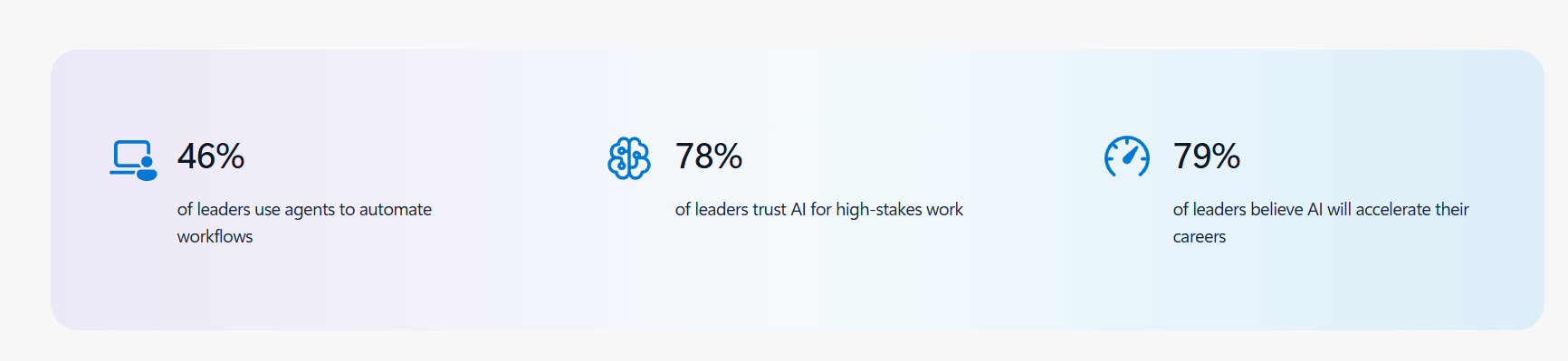
In 2026, the competitive advantage is not simply access to AI tools. It is structural integration.
Organizations that rebuild Dynamics CRM with intelligence embedded into workflows will operate with speed, clarity, and predictability.
Those that maintain legacy architecture will struggle with fragmentation, reactive decision-making, and forecasting volatility.
Rebuilding Dynamics CRM for AI-driven B2B sales and marketing is ultimately about reimagining how revenue teams operate.
It is about transforming CRM from a repository of past activity into an engine of future growth.
The question is no longer whether AI belongs in CRM.
The question is whether your CRM is ready for it.