Yooz report finds finance teams push deeper into AI adoption
This article is sponsored by Yooz.
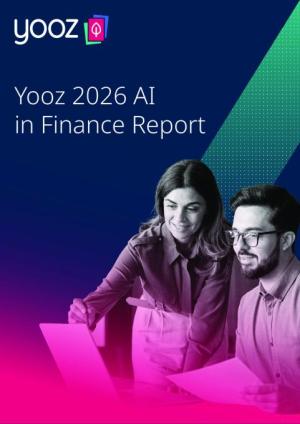
A growing number of organizations have adopted AI to a limited extent, but many professionals believe they have yet to make these tools a regular part of daily operations. Findings from a new research report from finance automation software vendor Yooz suggest that AI may already be reaching farther into the finance department than many employees acknowledge. But finance leaders still have time to optimize their deployment of AI-driven solutions to improve core processes, build trust among employees, and improve operational performance.
In its newly released Yooz 2026 AI in Finance Report, Yooz surveyed 500 finance professionals across different industries to investigate how finance teams are using AI, where they see the biggest value, and what challenges are slowing wider adoption.
"AI adoption in finance is no longer theoretical," according to the report. "Most teams are already experimenting with AI, and confidence continues to grow as familiarity increases."
Most finance teams use AI, but few embed it in core processes
Yooz finds that 67% of finance teams are either using or piloting AI, while only 10% say it is embedded in core processes. Another 22% say they are not using AI at all. In organizations that are now starting to use AI in everyday financial work, typical scenarios include accounts payable automation, fraud detection, approvals, and financial reporting.
Additionally, the research suggests that many finance teams likely use AI more than people realize. About one-third of those surveyed say AI is already built into more of their processes, typically through tools that handle invoice processing, spot unusual activity, and monitor financial risks in the background.
Reporting and analytics is the most common use case for AI in finance, according to the research. Forty-three percent of finance professionals say their teams currently use AI for reporting or analytics, while 27% use it for forecasting or financial planning.
"Reporting and analytics remains a common early entry point, with 43% saying their team uses AI there, likely because outputs are easier to generate and validate quickly," the report notes. "But as adoption matures, the differentiator will be embedding AI into transaction-heavy workflows where money moves and risk concentrates."
Emerging opportunities in fraud detection emerges as comfort with AI grows
The report finds that fraud prevention, audit, risk, and compliance could become the next big areas for AI use in finance. Right now, only 19% of respondents report using AI in those areas, even though AI tools can help spot unusual activity, identify suspicious vendor behavior, and improve oversight in workflows that handle large volumes of transactions.
Finance professionals are also growing more comfortable with AI tools. More than half of respondents, or 53%, say they feel more confident using AI than they did a year ago, while another 40% report no real change in confidence levels.
In addition, 42% of those surveyed describe themselves as "curious but cautious" about AI, while 26% say they feel excited and confident using the technology.
"Turning curiosity into consistent adoption requires embedding AI into shared workflows," the report notes. "For example, in AP, if AI flags duplicate invoices and unusual vendor behavior within a standardized approval process, every transaction is screened the same way before payment. That consistency reduces manual review time and strengthens controls at the transaction level."
Trust, training, leadership slow wider adoption
While many companies are continuing to expand their use of AI, Yooz finds that many finance teams are still not fully prepared to use the technology. Finance professionals say the biggest challenge is a lack of training and education, cited by 26% of respondents, followed closely by concerns about trusting AI-generated results at 25%.
Far fewer respondents, 12%, point to regulatory or compliance concerns, while 10% say budget limitations are the main obstacle.
The findings suggest that many finance organizations no longer view cost or regulation as the primary challenge. Instead, they struggle with building trust, educating employees, and establishing leadership around AI initiatives.
According to the survey, 24% of those surveyed say that within finance departments, IT and technology teams are most often leading AI adoption, compared with 13% who say CFOs or finance executives are leading these efforts. Another 22% say no one in particular is currently leading AI adoption.
As such, companies will need stronger support from top executives as they move from testing AI in small projects to using it across everyday operations throughout the business, according to the report.
How AI enables Lean Financial Operations
AI in finance is becoming part of everyday workflows rather than a separate tool. Companies see the best results when AI is built into existing finance processes because it improves speed and consistency without adding complexity, according to Yooz. The company urges finance teams to think about moving from small AI tests to “Lean Financial Operations,” a state in which team members do less manual work, experience fewer errors, and enjoy stronger controls built into daily operations.
Lean Financial Operations rely on clear processes, visibility, and continuous improvement. AI helps by reducing repetitive work, such as fixing invoice errors, re-entering data, resolving mismatches, rerunning reports, and repeating approvals.
When AI is built into the workflow, finance teams spend less time fixing problems and more time focused on oversight and insights, according to the report.
Yooz CEO Laurent Charpentier says finance leaders should focus less on AI hype and more on operational efficiency.
"Finance teams don’t need more hype. They need practical ways to take friction out of the work that slows the business down," he notes in the report. "The path to AI value is the same path to Lean Financial Operations: standardize what matters, automate what is repeatable, and strengthen controls as you scale. The winners will be the organizations that turn experimentation into consistent, end-to-end processes that free finance teams to focus on insight and impact."
FREE Membership Required to View Full Content:
Joining MSDynamicsWorld.com gives you free, unlimited access to news, analysis, white papers, case studies, product brochures, and more. You can also receive periodic email newsletters with the latest relevant articles and content updates.
Learn more about us here