Business Central’s AI Agents Run on Consumption Billing. Here’s What That Means for Your 2027 Budget
Most coverage of Business Central’s 2026 release wave 1 has focused on what the new AI agents do. The Payables Agent reads incoming invoices, matches them to vendors and GL accounts, and prepares them for approval. The Sales Order Agent handles order intake and processing with the same human-in-the-loop model. Agent Designer, which reached general availability in May 2026, lets consultants and power users build custom agents using natural language instead of AL code.
What has had far less attention is how these agents are actually priced, and the model is a real departure from what finance leaders are used to budgeting for. Microsoft Copilot itself is now bundled into both Business Central Essentials and Premium licences at no extra cost. But the Payables Agent and Sales Order Agent do not run on that bundled Copilot allocation. They run on Copilot Credits, a separate consumption-based unit billed through an Azure subscription, priced by usage rather than by seat.
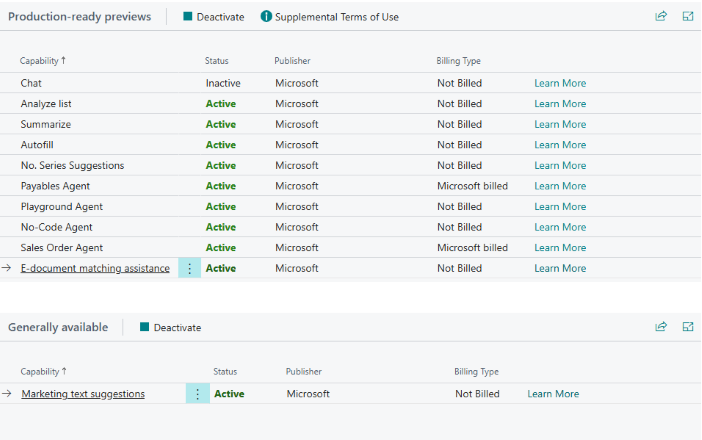
That distinction matters more than it sounds. A CFO who approves a Business Central renewal assuming AI capability is now “included” can be caught off guard when the Payables Agent’s actual running cost shows up as a variable Azure line item months later, driven by invoice volume rather than headcount. This article sets out what the consumption model actually involves, why it catches finance teams out, and how to build a budget for agentic ERP that will not need an emergency revision six months after go-live.
Industry Context: from feature release to metered utility
For most of Business Central’s history, new functionality arrived as part of a licence tier. You paid for Essentials or Premium per user per month, and whatever shipped in that release wave was yours to use. Copilot’s core chat and summarisation features still work that way in 2026: bundled into both tiers, no separate line item, no metering.
The agents are a different category of product. The Sales Order Agent and Payables Agent are structured as an “Agent Economy” consumption model, metered and billed based on actual usage rather than as a flat per-user fee, and settled through Copilot Credits purchased against an Azure subscription. This is consistent with the direction Microsoft has taken across its wider Copilot portfolio through 2026, where autonomous, transaction-processing agents are increasingly billed by the unit of work performed rather than bundled as a fixed-cost feature.
The logic is defensible. An agent processing ten thousand invoices a month is consuming far more compute than one processing two hundred, and a flat per-user fee would either overcharge the light user or undercharge the heavy one. But defensible pricing logic does not automatically translate into an internal budgeting process that is ready for it, and most Business Central customers currently are not.
The Business Challenge: a licensing model finance teams haven’t budgeted for
The practical problem is straightforward. ERP licensing has trained finance teams to think in fixed, predictable, per-user terms. A Business Central renewal is a known number that goes into next year’s software budget with reasonable confidence. Copilot Credits do not behave that way. Consumption scales with transaction volume, which means the AP team’s busiest month, quarter-end, year-end, a seasonal sales spike, is also the month the agent costs the most to run, at precisely the point finance is least inclined to be surprised by a new variable cost.
Without a forecasting model built specifically for this, organisations tend to discover the real running cost of their agents reactively, from an Azure invoice, rather than proactively, from a budget line they set deliberately. That is not a failure of the technology. It is a gap in how the rollout was planned.
Root Causes: why this keeps surprising finance leaders
Three things are compounding to make this surprise more common than it should be.
Vendor messaging blurs the line between “Copilot” and “the agents.” Microsoft’s own marketing, and most of the partner content built on top of it, tends to talk about “Copilot in Business Central” as a single concept. In practice there are two pricing models sitting inside that phrase: the bundled Copilot features, and the metered agents. A reader skimming a release wave summary can easily walk away thinking the whole capability set is now free.
Procurement and finance are evaluating different documents. The Business Central licence quote goes to procurement. The Azure consumption estimate, if it is built at all, sits with IT or the Microsoft partner. Unless someone deliberately connects those two conversations before go-live, the CFO signing off on the ERP renewal has no visibility into the Azure cost that is about to start accruing.
There is no mature internal benchmark yet. Because the Payables Agent and Sales Order Agent are new in this release wave, most finance teams have no historical consumption data to anchor a forecast against. Unlike a user-count-based licence renewal, where last year’s invoice is a reliable guide to next year’s, agent consumption cost currently has to be estimated from first principles, using expected transaction volumes rather than observed history.
Expert Analysis
Copilot is included. The agents that do the work are not.
This is the distinction worth repeating clearly, because it is the one most likely to be misunderstood in a budget conversation. Base Copilot functionality, including natural-language assistance and summarisation within Business Central, is bundled into both Essentials at $80 per user per month and Premium at $110 per user per month, with no separate charge. The Payables Agent and Sales Order Agent are not part of that bundle. They require Copilot Credits, purchased and consumed through an Azure subscription, and that subscription needs to exist and be provisioned before either agent can go into production. If your organisation does not already have an active Azure relationship structured for this, that itself is a procurement step that needs to happen well before the agent rollout, not during it.
Agent Designer changes who builds automation, and who owns its running cost
Agent Designer reaching general availability in May 2026 is significant for a different reason: it lowers the barrier to building custom agents dramatically. Consultants, product owners, and power users can now prototype an agent using natural-language instructions rather than AL development, and Business Central update 28.1 added the production deployment path for anything built this way. Custom agents run on the same runtime, security, and permission model as the built-in Payables and Sales Order agents.
That is a real productivity gain, but it also means the population of people who can create a new consumption-billed process inside the organisation just expanded well beyond the development team. A well-intentioned power user building a useful custom agent in Agent Designer is also, without necessarily realising it, creating a new ongoing Azure cost. Governance over who can build and deploy agents, and a review step before anything reaches production, needs to keep pace with how easy Microsoft has made it to build one.
Consumption billing is the right model, but it needs a different governance approach
None of this is an argument against the consumption model itself. Metered pricing tied to actual usage is fairer than a flat fee for both light and heavy users, and it is consistent with how Microsoft is pricing agentic capability across its broader portfolio. The issue is process, not pricing philosophy. Organisations that treat agent rollout as a licensing decision, made once during procurement, will be repeatedly surprised. Organisations that treat it as an operational cost with its own forecasting, monitoring, and monthly review, the way they already treat cloud infrastructure spend, will not be.
Real-World Implementation Lessons
Building a credible Copilot Credit forecast before go-live, based on realistic invoice or order volumes rather than vendor-supplied best-case numbers, consistently prevents the largest post-go-live budget surprises. Dynamics Square’s own ERP implementation cost calculator is a reasonable starting point for building that first-pass estimate before a formal pilot.
Running the Payables Agent or Sales Order Agent in a pilot against a single entity or business unit first, before enterprise-wide rollout, gives finance a real consumption baseline to extrapolate from instead of a theoretical one.
Setting Azure budget alerts and consumption caps at the subscription level, before the agent goes live rather than after the first unexpectedly high invoice, is a control that costs nothing to implement and prevents the most common source of finance-team frustration with agentic ERP.
Assigning explicit ownership of Copilot Credit monitoring, typically to whoever already owns Azure cost management, avoids the gap where nobody is watching consumption because it does not clearly belong to either the finance team or the IT team.
Common Pitfalls
Approving a Business Central renewal on the assumption that “Copilot is included” without separately scoping the Payables Agent or Sales Order Agent, then discovering the gap only when a project team tries to activate them.
Rolling out an agent to the full AP or sales team on day one instead of piloting against a limited volume first, which removes any chance to validate the consumption forecast before it is fully committed.
Allowing Agent Designer access to spread informally across the organisation without a review gate before production deployment, which creates unbudgeted consumption from agents that finance never approved.
Building the Azure consumption estimate in isolation from the Business Central licensing conversation, so the two numbers never get combined into a single, honest total cost of ownership figure for the AI agent programme.
Strategic Recommendations
Combine the Business Central licence quote and the Azure Copilot Credit estimate into a single total cost of ownership figure before presenting an agent rollout business case to finance leadership. Treating them as two separate approvals is what creates the surprise later.
Pilot the Payables Agent or Sales Order Agent against a defined, limited transaction volume for a full billing cycle before wider rollout, and use that real consumption data to build the production-scale forecast rather than relying on vendor estimates alone.
Establish a governance gate for anything built in Agent Designer before it reaches production, owned jointly by IT and finance, so new consumption-billed automation cannot go live without a budget owner attached to it.
Set Azure consumption alerts and, where available, spending caps at the subscription level as a standing control, not a one-time setup step, and review actual versus forecast consumption monthly for at least the first two quarters after go-live.
Treat Copilot Credit monitoring as an ongoing operational responsibility with a named owner, in the same way cloud infrastructure spend already has one, rather than as a one-off item closed out at go-live.
Future Outlook
The direction Microsoft has taken with the Agent Economy consumption model in 2026 is unlikely to reverse. As Agent Designer makes custom agent creation more accessible and Business Central’s agent runtime matures, more of Business Central’s advanced automation will likely arrive priced this way rather than bundled into the base licence, following the same pattern already visible across the wider Microsoft Copilot portfolio. Organisations that build a real forecasting and governance process for consumption-billed AI capability now will be better positioned for every subsequent release wave that extends this model, instead of relearning the same budgeting lesson each time.
Key Takeaways
Business Central’s core Copilot functionality is bundled into Essentials and Premium licensing in 2026, but the Payables Agent and Sales Order Agent are not. They run on Copilot Credits billed through a separate Azure subscription, metered by actual usage.
Agent Designer’s general availability in May 2026 makes it dramatically easier for non-developers to build custom agents, which also means it is dramatically easier to create new, unbudgeted consumption-billed processes without deliberate governance.
The most common cause of budget surprise is treating agent rollout as a one-time licensing decision instead of an ongoing operational cost that needs forecasting, monitoring, and a named owner.
A credible business case for agentic ERP combines the Business Central licence cost and the Azure consumption estimate into one total cost of ownership figure, validated by a limited pilot before full rollout.
This pricing model is the direction Microsoft’s broader Copilot portfolio is heading, not a one-off wrinkle specific to Business Central, so the governance discipline built now will apply to future release waves as well.
Conclusion
The Payables Agent and Sales Order Agent are useful additions to Business Central, and the underlying consumption pricing model is a fair way to charge for them. The risk is not the pricing structure itself. It is rolling these agents out with the budgeting habits built for flat-fee, per-user licensing, and discovering the mismatch through an unexpected Azure invoice rather than through a deliberate forecast.
Organisations that separate the licensing conversation from the consumption conversation, pilot before scaling, and put a named owner on ongoing Copilot Credit monitoring will get the productivity gain without the budget surprise. Dynamics Square’s Dynamics 365 consulting team works with Business Central customers on exactly this kind of agent rollout planning, from total cost of ownership modelling through pilot design and Azure consumption governance. Booking an ERP strategy consultation is a reasonable next step for any organisation evaluating the Payables Agent, Sales Order Agent, or a custom Agent Designer build for 2027 budget planning.
Frequently Asked Questions
Is Copilot free with Business Central in 2026?
Core Copilot functionality is bundled into both Essentials and Premium licence tiers at no separate charge. The Payables Agent and Sales Order Agent are a separate category, billed through Copilot Credits on a consumption basis via Azure, and are not included in the base licence cost.
What are Copilot Credits and how are they billed?
Copilot Credits are a metered consumption unit that Microsoft uses to bill usage of agentic capabilities like the Payables Agent and Sales Order Agent, purchased and consumed through an Azure subscription rather than as part of the Business Central per-user licence.
Do I need a separate Azure subscription to use the Payables Agent?
Yes. The Payables Agent and Sales Order Agent require an active Azure subscription to purchase and consume Copilot Credits. This needs to be provisioned as part of project planning, not assumed to already exist alongside a standard Business Central licence.
What does Agent Designer let me build without an Azure subscription?
Agent Designer itself, which reached general availability in May 2026, allows consultants and power users to prototype custom agents using natural language. Running those agents in production, however, uses the same consumption-billed runtime as the built-in agents, so an Azure subscription is still required once a custom agent moves beyond prototyping.
How do I estimate Copilot Credit consumption before rolling out an agent?
The most reliable approach is a limited pilot against real transaction volume for a full billing cycle, rather than relying solely on vendor-supplied estimates. Piloting against a single entity or business unit first gives a real consumption baseline you can extrapolate to full-scale rollout with far more confidence.