Warehouse Spatial Awareness: Why X, Y, and Z Coordinates May Be the Biggest WMS Advancement You're Not Talking About
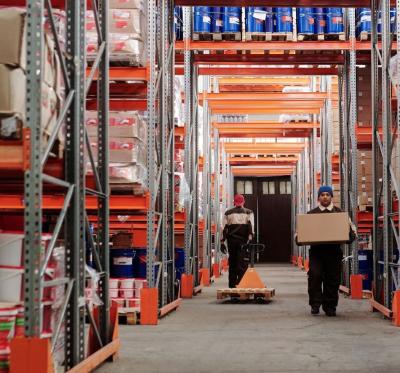
Travel is one of the biggest sources of waste in a warehouse. Every day, warehouse associates spend a significant portion of their shifts simply walking or driving between locations. Yet until now, most enterprise resource planning (ERP)-based warehouse systems have had very little understanding of the warehouse as a physical space. They’ve known what inventory exists and where it’s stored, but they haven’t truly understood distance. That's starting to change.
Microsoft recently introduced warehouse spatial location as a preview capability within Dynamics 365 Supply Chain Management. Adding X, Y, and Z coordinates to warehouse locations may seem like a small enhancement, but I believe it's one of the most important advancements to Dynamics 365 warehouse management in years.
Moving Beyond a Static Warehouse
A traditional warehouse management system (WMS) operates as a static, two-dimensional map of a three-dimensional operating environment. It can cite inventory balances, warehouse locations, and inventory transactions but can’t comprehend physical distance, travel effort, congestion, vertical movement, proximity to production, or the actual flow of material through a facility.
This lack of depth leads to missed opportunities for manufacturers and distributors seeking to make their operations more efficient.
Once a warehouse becomes spatially aware, an entirely different level of operational intelligence becomes possible. With spatial coordinates assigned to every storage location, Dynamics 365 can now calculate actual travel distance between locations instead of relying on location numbering or predefined sequences.
Today, Microsoft is using this capability to optimize picking by sequencing work based on travel distance. That is valuable on its own, but its larger significance is what it gives the system: a way to factor physical movement into warehouse decisions.
What Spatial Awareness Unlocks
For years, we’ve helped warehouse managers export data into Excel, build pivot tables, analyze SKU velocity, and identify re-slotting opportunities. Those projects often delivered meaningful results, but they were point-in-time exercises. By the time the analysis was complete, order profiles had already changed.
FREE Membership Required to View Full Content:
Joining MSDynamicsWorld.com gives you free, unlimited access to news, analysis, white papers, case studies, product brochures, and more. You can also receive periodic email newsletters with the latest relevant articles and content updates.
Learn more about us here