CRM Relationship Intelligence Explained: From Mind Maps to Predictive Deal Insights
CRM systems are rich with relationship data, but most teams still struggle to turn those connections into clear decisions.
Contacts, accounts, opportunities, and stakeholders are all technically “linked” in CRM. Yet when sales cycles slow down or deals stall, teams are left asking the same questions:
- Who actually influences this deal?
- Which stakeholders matter most right now?
- How do relationships impact pipeline risk and deal velocity?
- Where should we act next?
This is where CRM visualization must evolve into CRM relationship intelligence.
With Map My Relationships, organizations using Dynamics 365 CRM can move beyond static relationship views and turn CRM records into actionable influence insights that support faster, more confident decisions.
Why CRM relationship visualization is no longer enough
Traditional CRM views answer structural questions:
- What is related to what?
- What is the parent or child record?
But modern sales, account, and leadership teams need answers to impact-driven questions:
- Which relationships influence deal outcomes?
- How does stakeholder engagement affect close probability?
- Where are decision paths breaking down?
Visualization alone doesn’t satisfy this intent. Intelligence does.
From CRM records to influence insights
Map My Relationships helps teams turn CRM record relationships into actionable influence insights by combining multiple visual perspectives with context, analytics, and actionability.
Instead of forcing users into one static view, it enables teams to explore relationships the way decisions actually happen, across people, structure, and influence.
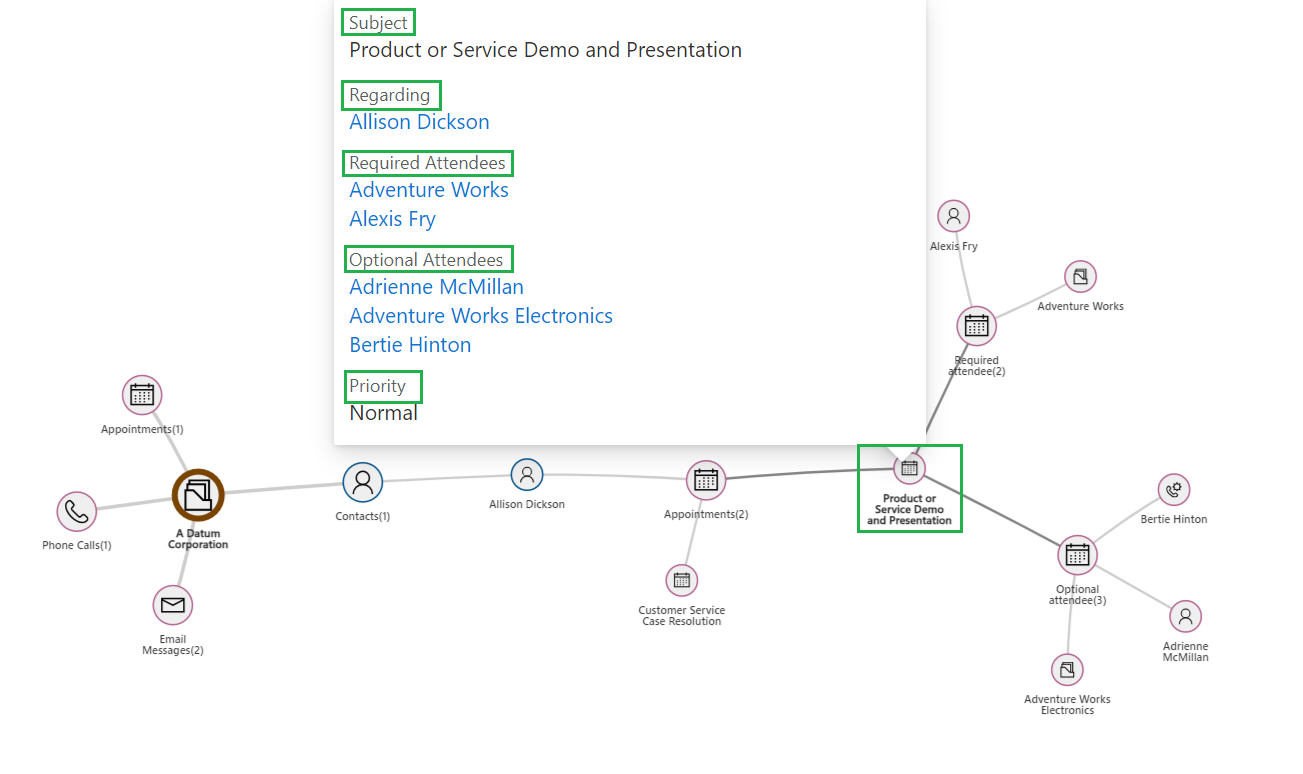
Mind Map View: Discover influence networks beyond org charts
The Mind Map View visualizes CRM relationships in a dynamic, radial layout centered around any record.
What it enables
- Reveal influence networks across contacts, accounts, and opportunities
- Identify informal stakeholders that don’t appear in hierarchies
- Explore complex buying committees without jumping between records
Business impact
By exposing influence paths, teams can:
- identify key stakeholders earlier
- avoid blind spots in stakeholder engagement
- accelerate deal discovery and qualification
This directly supports faster deal closure by ensuring the right relationships are engaged at the right time.
Hierarchy View: Perform impact analysis on CRM hierarchies
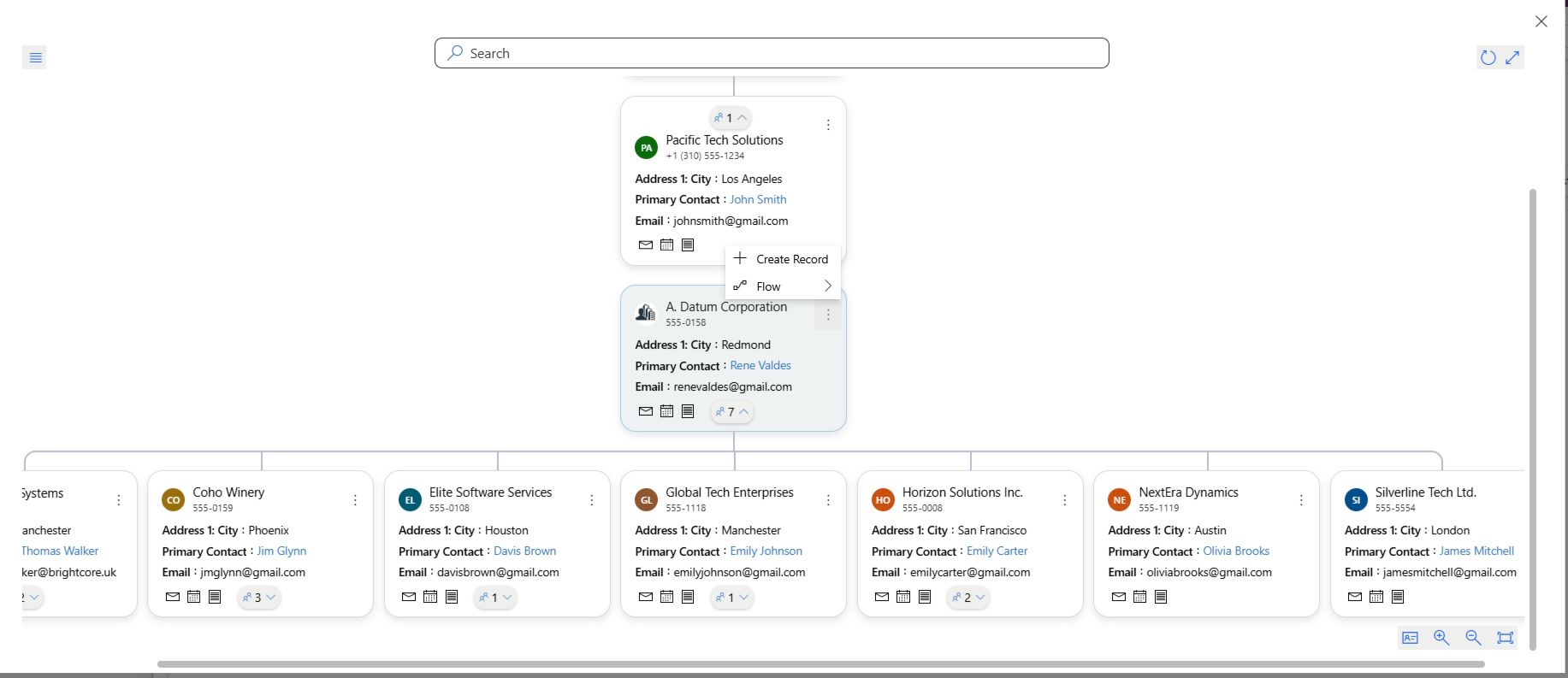
The Hierarchy View focuses on structured relationships such as parent-child accounts and reporting lines.
What it enables
- Visualize enterprise account structures clearly
- Understand escalation paths and decision authority
- Analyze how hierarchy impacts deal movement
Business impact
Hierarchy View supports impact analysis for CRM hierarchies by helping teams:
- predict where approvals may stall
- assess risk in multi-entity deals
- align engagement strategies with decision flow
Instead of treating hierarchy as static data, teams gain a decision-ready structure.
Tree View: From insight to action, without context switching
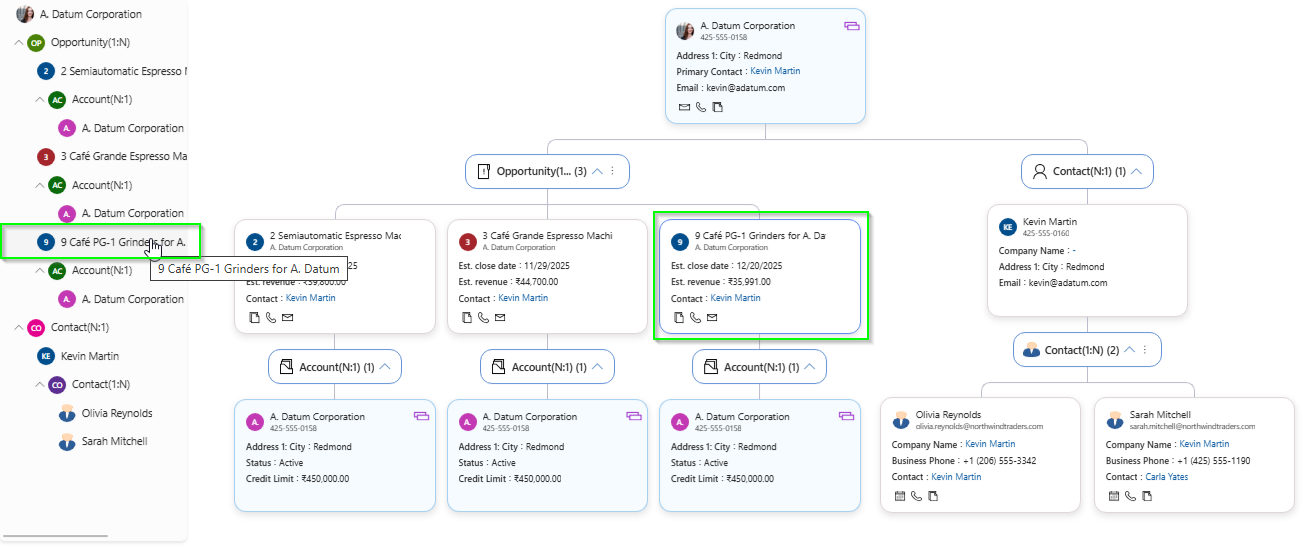
The Tree View combines top-to-bottom navigation with operational context.
What it enables
- Drill into relationships while retaining full structure
- View related records alongside activity and engagement data
- Take actions directly from the relationship view
Business impact
This is where relationship intelligence becomes execution.
Tree View enables:
- prioritization of high-impact relationships
- faster follow-ups
- reduced CRM friction
It transforms insights into next best actions, not just observations.
Analytics-ready relationship intelligence, not just visuals
To meet today’s expectations, CRM visualization must support analytics and prediction.
Map My Relationships is designed to support this evolution by enabling messaging and usage around:
- Relationship influence scores to identify high-impact stakeholders
- Stakeholder engagement heatmaps to assess relationship health
- Suggested actions based on relationship data to guide next steps
This positions the solution for predictive CRM relationship analysis, where teams can:
- anticipate deal risk
- understand relationship gaps
- prioritize outreach based on influence, not intuition
Decision scorecards from CRM relationships
When relationship data is visualized clearly and consistently, it becomes easier to translate into decision scorecards.
Map My Relationships supports this by helping teams:
- compare influence strength across stakeholders
- assess relationship coverage for opportunities
- evaluate how relationship dynamics impact pipeline confidence
These insights help leadership teams move from anecdotal updates to data-backed decisions.
Built for real CRM roles and real outcomes
Map My Relationships supports multiple roles across the CRM ecosystem:
- Sales teams gain clarity into influence networks and buying committees
- Account managers understand complex customer structures instantly
- CRM administrators deliver advanced visualization without custom development
- Leadership teams gain visibility into relationship-driven pipeline risk
All while working entirely within Dynamics 365 CRM.
Why this matters now
As CRMs become more data-rich and AI-driven, relationship clarity becomes foundational.
Organizations that understand:
- who influences decisions
- how relationships affect outcomes
- where engagement gaps exist
will outperform those that rely on disconnected records and intuition.
Map My Relationships helps teams move beyond visualization and prepare CRM data for analytics-driven, AI-ready decision making.
FAQs
How is relationship intelligence different from CRM relationship visualization?
Relationship visualization shows how records are connected.
Relationship intelligence goes further by helping teams understand:
- which relationships matter most
- how influence flows across stakeholders
- how relationships impact pipeline health and deal outcomes
Visualization is the foundation; intelligence is the business advantage.
How does Map My Relationships support CRM relationship intelligence?
Map My Relationships transforms CRM record relationships into actionable influence insights by combining:
- Mind Map views for influence network discovery
- Hierarchy views for structural and escalation analysis
- Tree views for prioritization and action
This enables teams to move from static views to decision-ready relationship insights inside CRM.
What is influence network analysis in CRM?
Influence network analysis in CRM helps identify:
- key stakeholders affecting deals
- informal influencers beyond org charts
- relationship clusters impacting decisions
Map My Relationships supports influence network analysis by visually connecting related CRM records so teams can quickly identify who truly influences outcomes.
Can CRM relationship data help predict deal risk?
Yes. When CRM relationships are visualized and analyzed together, teams can identify:
- missing stakeholders
- weak engagement points
- decision bottlenecks
This enables predictive CRM relationship analysis, helping teams anticipate deal risk and take corrective action earlier.
Can I take actions directly from relationship views?
Yes. Map My Relationships allows users to:
- create activities
- associate records
- navigate related entities
All directly from relationship views, turning insights into immediate next best actions without switching CRM screens.
See the impact of relationship intelligence in Dynamics 365 CRM
If your CRM data feels connected but difficult to interpret, Map My Relationships helps bridge that gap.
By combining Mind Map, Hierarchy, and Tree views with analytics-ready insights, it enables teams to:
- identify key stakeholders
- predict relationship impact on pipeline
- take action with confidence
Explore Map My Relationships and experience how CRM relationship intelligence transforms decisions. Download 15-day free trial from the Inogic Website or Microsoft Marketplace for first-hand experience.
Have a doubt or need a personalised demo? Reach us at [email protected].