How to Choose a Business Central Implementation Partner?
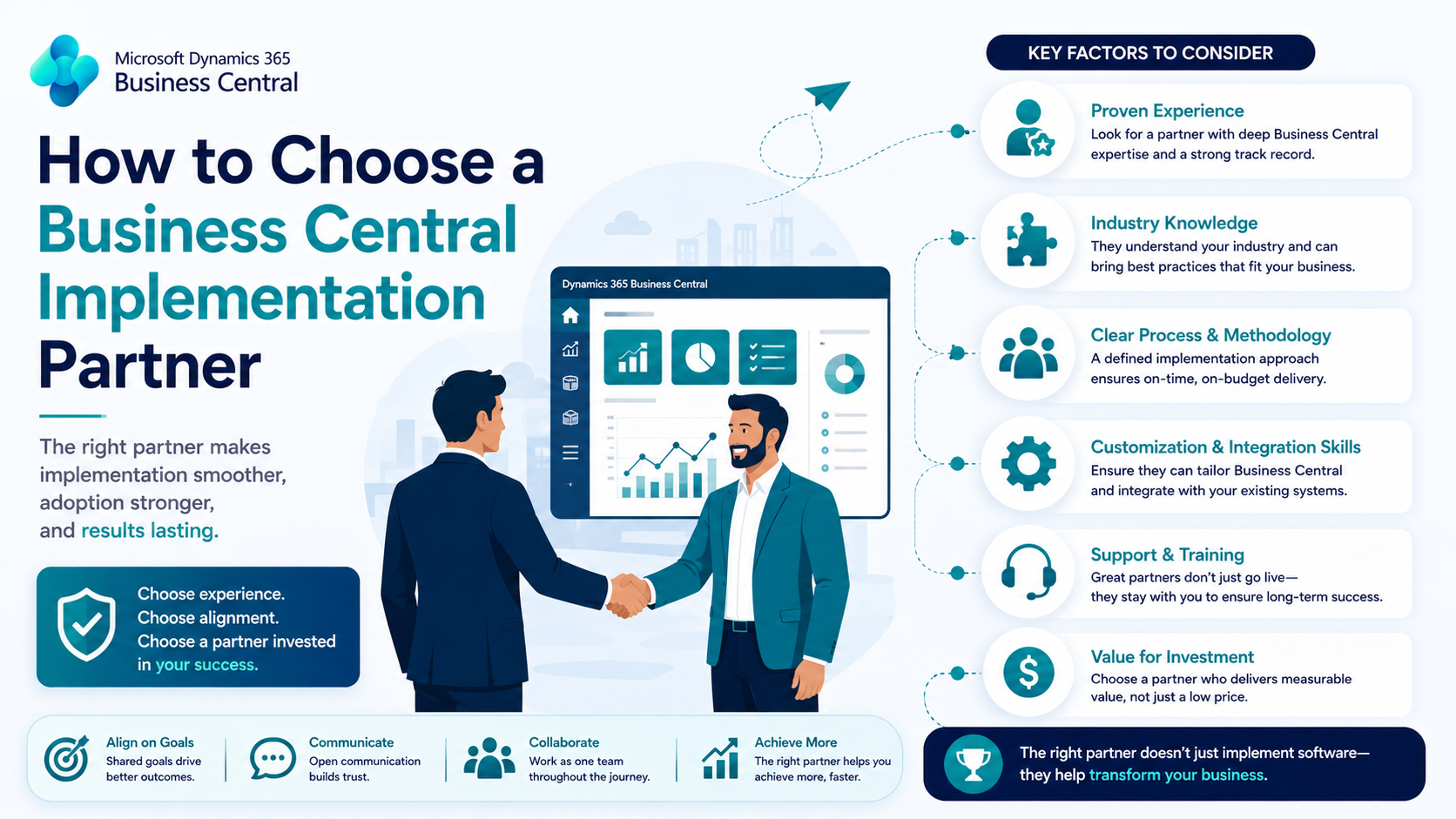
Picking a Business Central implementation partner is one of the highest-stakes decisions in an ERP project, and it's also one of the easiest to get wrong. Two partners can quote nearly identical prices for the "same" implementation and still deliver wildly different outcomes. The gap almost never comes down to the software. It comes down to who's configuring, migrating, and supporting it.
Here's what actually separates a partner worth hiring from one that will leave you re-implementing in three years.
Start With Industry Experience, Not Just Certifications
Microsoft certifications tell you a partner knows the platform. They don't tell you whether that partner has ever configured Business Central for a business like yours. A distribution company with complex inventory and multi-warehouse needs has very different requirements than a professional services firm billing by project.
Ask any partner you're evaluating for specific examples of implementations in your industry, not just a generic client list. A partner who has solved your kind of problem before will ask sharper questions during discovery and avoid mistakes a generalist wouldn't even know to look for.
Evaluate How They Approach Discovery
The discovery phase is where a good implementation gets separated from a mediocre one, and it's also where you can learn the most about a potential partner before signing anything.
Watch for partners who ask detailed questions about your current processes, pain points, and reporting needs before proposing a solution. If a partner jumps straight to configuration recommendations without understanding how your business actually operates, that's a warning sign. The goal of discovery isn't to replicate your old system in new software. It's to identify what should change and what shouldn't.
Ask About Their Data Migration Process Specifically
Data migration is where a large percentage of implementation problems originate, yet it's often the phase partners spend the least time discussing during the sales process. Before signing, ask pointed questions:
- How do they handle data cleansing before migration, not just the transfer itself?
- What's their process for validating migrated data against the source system?
- Have they migrated data from your specific current system before?
- What happens if data issues surface after go-live?
A partner with a vague answer to any of these questions is more likely to rush this phase, and the consequences usually show up months later in the form of reporting errors that are hard to trace back to their root cause.
Look Into Their Support Model Before You Need It
Too many businesses only think about post-go-live support after they're already struggling with it. Before choosing a partner, get specific answers about what happens after launch:
- Is post-go-live support included, or does it start from zero the day the project closes?
- What are their response time commitments for critical issues versus minor ones?
- Will you have access to consultants who actually worked on your implementation, or a general help desk?
- How do they handle Microsoft's twice-yearly Business Central releases?
A partner who implements the system and disappears is setting you up for the exact support gap that causes so many businesses to quietly abandon good functionality simply because nobody's around to help them use it properly.
Check References the Right Way
Reference calls are only useful if you ask the right questions. Instead of "were you happy with them," ask things like:
- Did the project stay on budget and timeline, and if not, why?
- How did they handle unexpected issues during the project?
- What would you do differently if you started the implementation again?
- How responsive have they been since go-live, not just during the sales process?
Partners with strong track records won't hesitate to connect you with references who can speak honestly, including about challenges that came up along the way. Nobody's implementation is flawless, and partners who claim otherwise are usually the ones worth being cautious about.
Understand Their Pricing Structure Fully
Price matters, but the cheapest quote is rarely the best value once you account for scope gaps that surface mid-project. When comparing proposals, make sure you understand exactly what's included:
- Is data migration scoped for your actual data volume and complexity, or a generic estimate?
- Are testing and user acceptance phases clearly defined, or vaguely bundled in?
- What's covered under the base price versus billed as a change order later?
- Is training role-based, or a single generic session for everyone?
A detailed, itemized proposal is usually a better sign than a low, vague one. Partners who scope carefully upfront tend to have fewer surprises later.
Click here to know more about Business Central pricing and Licensing.
Red Flags Worth Taking Seriously
A few patterns should make you pause before signing with any implementation partner:
- Pressure to sign quickly without a proper discovery or scoping conversation
- Reluctance to provide references specific to your industry
- Vague answers about their post-go-live support model
- A one-size-fits-all implementation methodology regardless of business size or complexity
- No clear plan for testing beyond basic system checks
None of these are automatic disqualifiers on their own, but more than one showing up in the same conversation is worth taking seriously.
Why This Decision Deserves More Time Than It Usually Gets
Businesses often spend more time comparing software features than comparing implementation partners, even though the partner has far more influence over whether the project actually succeeds. The platform is largely the same regardless of who implements it. The outcome rarely is.
Dynamics Square has implemented Business Central for US businesses across manufacturing, distribution, retail, and professional services for more than 15 years, with a discovery process built around understanding how each business actually operates before any configuration decisions get made. That approach is why our clients tend to see stronger adoption and fewer surprises after go-live.
If you're currently evaluating implementation partners, it's worth having a direct conversation about scope, support, and what a realistic timeline actually looks like for your business. Talk to Dynamics Square about your Business Central implementation before you commit to a partner.
Frequently Asked Questions
What questions should I ask a Business Central implementation partner?
Ask about their industry experience, data migration process, post-go-live support model, and request references specific to businesses similar to yours in size and industry.
How long does a typical Business Central implementation take?
Timelines vary based on complexity, but most mid-sized implementations run three to six months from discovery through go-live, with additional time needed for extensive customization or multi-entity setups.
Is the cheapest implementation partner usually the best choice?
Not necessarily. Low quotes often come from scope gaps that surface as change orders later. A detailed, itemized proposal is generally a stronger signal of a well-planned project than the lowest price alone.
Should I choose a partner based only on Microsoft certifications?
Certifications confirm platform knowledge but don't guarantee industry-specific experience. Look for partners who can point to implementations in your specific industry, not just a general client list.